
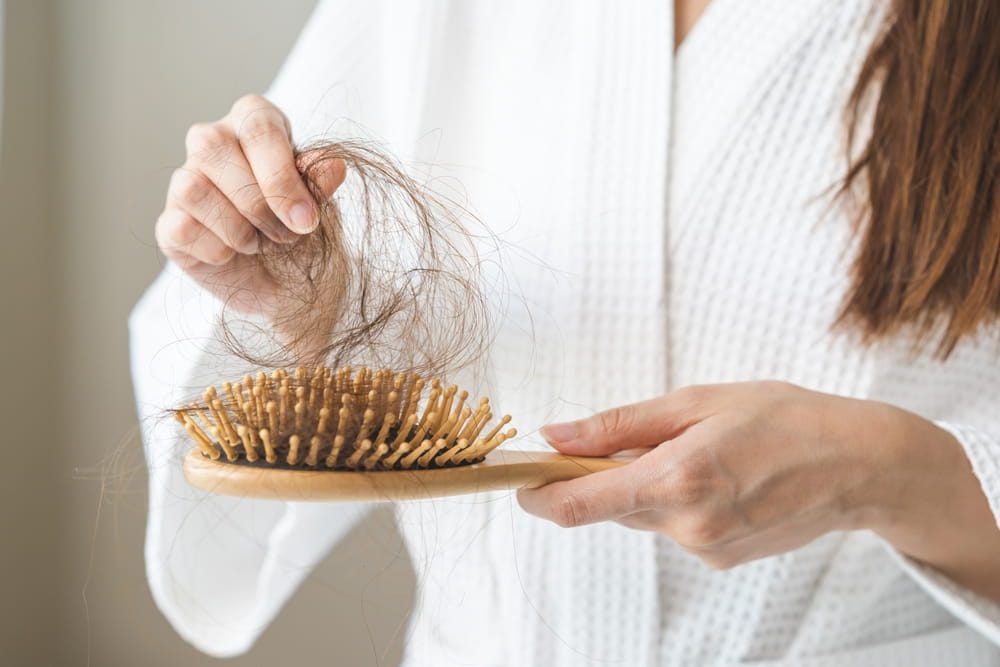
Hair loss can be one of the most emotionally distressing changes patients experience during menopause or while undergoing significant metabolic transformation with GLP-1 medications such as semaglutide or tirzepatide. While these therapies can dramatically improve metabolic health, weight, and longevity, they can also temporarily shift the body’s physiologic balance in ways that affect hair growth. At ReGen, we approach hair restoration by addressing the root biologic cause, supporting follicle health at the cellular level using advanced regenerative therapies such as exosomes.
Why Hair Loss Occurs During Menopause
Menopause causes hair loss primarily due to hormonal changes that disrupt the natural hair growth cycle. Hair follicles are highly sensitive to estrogen, progesterone, and androgen balance. As estrogen and progesterone levels decline, several physiologic changes occur that directly impact hair follicles:
- Reduced estrogen shortens the hair growth (anagen) phase
- Increased relative androgen activity can shrink hair follicles
- Reduced blood flow and nutrient delivery to follicles
- Increased inflammation and oxidative stress
- Slower cellular turnover and regenerative capacity
The result is often thinning hair, widening parts, reduced volume, and slower regrowth. The hair follicles actually remain alive, but become dormant or weakened. This distinction is critical because dormant follicles can often be reactivated with the right regenerative signals.
Why GLP-1 Medications Can Also Contribute to Hair Shedding
GLP-1 receptor agonists such as semaglutide and tirzepatide are powerful metabolic therapies that improve insulin sensitivity, reduce inflammation, and promote weight loss. The hair shedding associated with GLP-1 therapy is not caused by toxicity or damage to follicles. It may occur in some patients due to several physiologic factors:
- Rapid weight loss shifts the body into a metabolic recalibration phase
- Nutrient partitioning prioritizes vital organs over hair follicles
- Temporary physiologic stress can push follicles into a resting phase (telogen effluvium)
- Hormonal adjustments alter follicle cycling
This type of hair loss is typically temporary and reversible, but patients often want to accelerate recovery and restore hair density sooner.
What Are Exosomes?
Exosomes are microscopic extracellular vesicles naturally released by stem cells. They function as cellular messengers, delivering regenerative signals to nearby tissues. Exosomes contain powerful biologic components including:
- Growth factors
- Messenger RNA (mRNA)
- MicroRNA
- Anti-inflammatory signaling molecules
- Proteins that stimulate tissue repair
Unlike stem cells themselves, exosomes do not become new tissue. Instead, they instruct your existing cells to repair, regenerate, and function more efficiently. In hair restoration, exosomes communicate directly with dormant or weakened hair follicles, stimulating them to re-enter the active growth phase.
How Exosomes Help Restore Hair Growth
Exosome therapy addresses the root biologic dysfunction contributing to hair thinning by:
- Reactivating dormant hair follicles
- Extending the hair growth phase
- Increasing blood flow to the scalp
- Reducing inflammation around follicles
- Strengthening existing hair shafts
- Improving scalp health and cellular turnover
- Increasing hair thickness and density
Rather than forcing unnatural growth, exosomes restore the scalp’s natural regenerative environment.
What to Expect During Treatment
Exosome hair restoration at ReGen is a straightforward, well-tolerated procedure performed in the office.
Treatment Process
A series of approximately 16–20 small injections are administered across the scalp
The injections target areas of thinning or reduced density
A scalp massage is performed following the injections to optimize distribution and absorption
The entire procedure typically takes 30–45 minutes
Most patients describe the injections as minimal discomfort, similar to small pinches or pressure sensations. No downtime is required, and patients can resume normal activity immediately.
Timeline: What to Expect Over 6 Months
Hair restoration is a biologic process that occurs gradually as follicles respond to regenerative signaling.
Month 1
Reduction in excessive hair shedding
Improved scalp health and circulation
Follicles begin transitioning back into active growth phase
Month 2–3
Early signs of new hair growth
Existing hair may feel thicker and stronger
Reduced thinning appearance
Month 3–4
Noticeable improvement in density
Increased hair volume
Improved texture and quality
Month 4–6
Continued thickening and strengthening
Increased follicle productivity
Fuller, healthier hair appearance
Hair continues to improve beyond 6 months as follicles remain in a healthier growth cycle.
Why Exosomes Are Especially Effective for Menopause and GLP-1-Related Hair Loss
Both menopause and GLP-1-associated shedding primarily affect follicle function, not follicle survival. This makes them ideal candidates for regenerative therapy.
Exosomes help:
- Restore follicle signaling disrupted by hormonal change
- Accelerate recovery from metabolic-related shedding
- Support cellular regeneration in aging scalp tissue
- Improve overall scalp health and follicle longevity
This approach aligns with ReGen’s philosophy of restoring the body’s natural regenerative capacity rather than masking symptoms.
The ReGen Approach: Treating the Root Cause
Hair loss during menopause or metabolic transformation is not permanent damage—it is a biologic signal that follicles need support. By delivering regenerative exosome signaling directly to the scalp, we help restore the environment necessary for healthy, sustained hair growth.
Patients frequently report:
- Reduced shedding within weeks
- Improved thickness and volume within months
- Increased confidence and improved overall well-being
Hair restoration is not simply cosmetic, it reflects improved cellular health.
Is Exosome Hair Restoration Right for You?
Exosome therapy is ideal for patients experiencing:
- Menopause-related hair thinning
- GLP-1-associated shedding
- Early or moderate hair thinning
- Reduced hair density or volume
- Slower hair regrowth
Early intervention produces the best outcomes, as dormant follicles respond more effectively than follicles inactive for extended periods.
Schedule Your Appointment at ReGen Advanced Infusion & Wellness
At ReGen, we combine regenerative medicine with precision biologic therapies to restore function at the cellular level. Exosome therapy represents one of the most advanced and effective tools available for restoring hair health naturally.
If you are experiencing hair thinning associated with menopause, weight loss, or hormonal changes, regenerative therapy can help restore your body’s natural growth pathways.
Your body already has the blueprint for healthy hair. Exosomes help activate it. Contact us today to schedule your appointment. You can call, text, or fill out a form online!