
Autoimmune Conditions
Schedule an Appointment in Arizona, Utah & Michigan



Understanding immune dysregulation, chronic inflammation, and regenerative pathways toward improved function
Autoimmune diseases arise when the immune system becomes chronically overactive and misdirected, attacking healthy tissues instead of protecting them. This leads to persistent inflammation, tissue injury, and progressive dysfunction across multiple organ systems. While conventional care often focuses on immune suppression, regenerative medicine emphasizes immune modulation, tissue support, and restoration of physiologic balance.
Autoimmune Condition Treatment Options
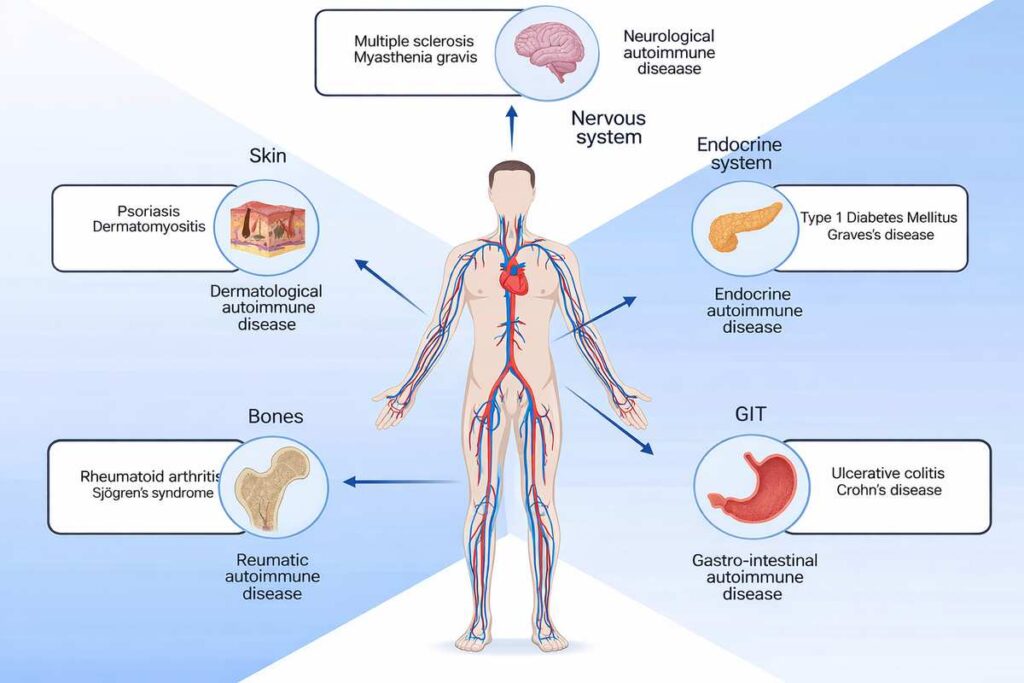
Understanding Autoimmune Conditions
Autoimmune conditions develop through an interplay of genetic susceptibility and environmental triggers such as infections, chronic stress, gut permeability, toxin exposure, and hormonal imbalance. These triggers disrupt immune tolerance, leading to sustained cytokine release and autoantibody production.
Chronic inflammation damages tissues, impairs repair mechanisms, and sensitizes the nervous system, explaining why many patients experience pain, fatigue, brain fog, and multisystem symptoms. Regenerative medicine focuses on interrupting this inflammatory loop, supporting cellular repair, and restoring immune regulation rather than simply suppressing immune activity.
Rheumatoid Arthritis
Rheumatoid arthritis (RA) is a systemic autoimmune disease characterized by chronic inflammation of the synovial lining of joints, leading to pain, swelling, stiffness, and progressive joint destruction.
Over time, unchecked inflammation can cause irreversible joint damage, deformity, and involvement of other organs such as the lungs and cardiovascular system. From a regenerative medicine perspective, the goal is to reduce inflammatory signaling, support joint tissue health, and improve function, helping preserve mobility and quality of life while complementing conventional rheumatologic care.
Lupus (Systemic Lupus Erythematosus)
Lupus is a complex, multisystem autoimmune condition in which the immune system produces autoantibodies that can affect the skin, joints, kidneys, brain, heart, and blood cells.
The disease course is often unpredictable, with flares driven by immune activation, stress, infection, and inflammation. Regenerative-focused care aims to support immune balance, reduce systemic inflammation, and protect organ function, particularly during periods between flares when restoring physiologic resilience is critical.
Ulcerative Colitis
Ulcerative colitis is an autoimmune-mediated inflammatory bowel disease limited to the colon and rectum, marked by chronic mucosal inflammation and ulceration.
Persistent intestinal inflammation disrupts nutrient absorption, gut barrier integrity, and immune regulation throughout the body. Regenerative medicine emphasizes gut healing, immune modulation, and inflammatory control, recognizing the central role of the gut–immune axis in both intestinal and systemic autoimmune activity.
Crohn’s Disease
Crohn’s disease is a form of inflammatory bowel disease that can affect any part of the gastrointestinal tract and often involves deeper, transmural inflammation.
This chronic inflammation increases the risk of strictures, fistulas, malabsorption, and systemic symptoms such as fatigue and joint pain. A regenerative approach focuses on reducing inflammatory burden, supporting intestinal tissue repair, and improving metabolic and immune resilience, which may help reduce flare frequency and systemic complications.
Psoriasis
Psoriasis is a chronic autoimmune skin disease driven by accelerated immune signaling and excessive inflammation, resulting in rapid skin cell turnover and plaque formation.
Beyond the skin, psoriasis reflects a state of systemic inflammation, increasing the risk of cardiovascular disease, metabolic dysfunction, and joint involvement. Regenerative medicine approaches aim to lower systemic inflammation, support immune regulation, and improve skin and metabolic health, not just suppress surface symptoms.
Psoriatic Arthritis
Psoriatic arthritis is an inflammatory autoimmune joint disease associated with psoriasis, affecting joints, tendons, and connective tissue.
If left untreated, ongoing inflammation can lead to joint damage, reduced mobility, and chronic pain. Regenerative-focused care seeks to preserve joint integrity, reduce inflammatory stress, and support musculoskeletal tissue health, helping patients maintain function and quality of life alongside standard therapies.
The ReGen Approach to Autoimmune Conditions
At ReGen Advanced Infusion & Wellness, autoimmune disease is approached as a systems-level immune dysregulation, not a single-organ problem. Our regenerative philosophy focuses on reducing chronic inflammation, restoring immune balance, optimizing gut and metabolic health, and supporting the body’s innate capacity for tissue repair. By addressing the shared drivers of autoimmune disease, rather than suppressing symptoms alone, we help patients improve stability, reduce flare frequency, preserve organ and joint function, and achieve better long-term outcomes through individualized, comprehensive care.
Contact ReGen Advanced Infusion & Wellness Center today to take the first step towards recovery. Call, text, or fill out a contact form to schedule your appointment today.
Where to Get Autoimmune Condition Treatment
ReGen Advanced Infusion & Wellness Center offers treatment at three convenient locations:

We are here to help you on your journey to wellness. Call, text, or fill out our contact form to schedule your appointment.

Learn more about the different regenerative treatments and therapies we offer. Let us help you on your journey to health and recovery!

Looking for additional information? Our doctors have written a collection of articles providing you with additional information on a variety of topics.

Discover science-backed information on all of our treatment options. Visit our library of clinical research that supports our approach to enhancing your health and overall quality of life.